If this is your first time buying a tablet coating machine, start with your production requirements, not motor power, drum diameter, or the number of spray guns.

First define your normal batch size, tablet size and shape, coating type, coating liquid, production target, automation requirements, and site conditions. These details determine the right coater type, working capacity, spray and drying system, and control level.
A larger machine is not always better. More spray guns are not always better either. The right machine should handle your normal production reliably, match spray capacity with drying capacity, and meet your cleaning, documentation, space, and budget requirements.
1. Define Your Production Requirements First
Before you compare tablet coating machines, prepare a basic requirement list.
| Requirement | What to Prepare | Why It Matters |
|---|---|---|
| Batch size | Normal, minimum, and maximum kg/batch | Determines the practical machine size |
| Tablet size and shape | Diameter, thickness, shape, and weight | Affects tablet-bed volume and movement |
| Coating type | Film coating, sugar coating, enteric coating, or other | Affects process and machine configuration |
| Coating liquid | Aqueous, solvent-based, suspension, etc. | Affects spray and drying requirements |
| Production target | Batches per day or target output | Helps define machine size and batch frequency |
| Automation | Basic HMI, data logging, recipe functions, etc. | Defines the control-system scope |
| Cleaning / validation | Manual cleaning, CIP/WIP, FAT, IQ/OQ, etc. | Affects machine and project scope |
You do not need to know every technical specification before you contact a supplier. You do need to explain what the machine will process and how you plan to use it.
Complete information helps the supplier recommend a machine for your actual requirements. It also avoids a quotation based only on maximum rated capacity.

Tablet and Coating Requirements
The same batch weight does not always need the same machine configuration.
Larger, unusual, or fragile tablets can move differently inside the drum. The coating process also matters. Film coating, sugar coating, and enteric coating have different spray, drying, and process-control requirements.
Tell the supplier whether your coating liquid is aqueous or solvent-based.
If the project uses flammable solvents, high-potency materials, or special containment, state this at the start. These conditions can change the machine design, safety features, and price.
2. Choose the Right Type of Tablet Coater
For a first purchase, start with the three main types of coating equipment.
| Coater Type | Typical Use | Main Advantage | Main Limitation | Approx. Price Range* |
|---|---|---|---|---|
| Conventional Coating Pan | Simpler coating processes, especially traditional sugar coating and chocolate coating | Simple design and lower initial cost | Lower drying efficiency and less precise process control | USD 800-6,000 |
| Perforated Pan Coater | Modern tablet film coating and general pharmaceutical production | Better tablet-bed mixing, spray control, and air handling | More complex and more expensive than a basic coating pan | USD 10,000-120,000+ |
| Fluid-Bed Coater | Pellets, granules, mini-tablets, and some specialized coating processes | Efficient heat and mass transfer | Usually not the first choice for conventional tablet batches | USD 8,000-100,000+ |
* These are broad budget ranges based on public supplier quotations as of October 2026. Use them only for early budget planning. They are not directly comparable formal quotations.
* These are broad budget ranges based on public supplier quotations as of October 2026. Use them only for early budget planning. They are not directly comparable formal quotations.
For most modern pharmaceutical tablet film-coating projects, a perforated pan coater is the main type to evaluate.
A fluid-bed coater may be more suitable for pellets, granules, mini-tablets, or specialized functional coatings. A conventional coating pan may still suit simpler coating processes or projects with lower automation requirements.

For a more detailed comparison, see Types of Tablet Coating Machines.
3. Match Machine Capacity to Your Real Working Batch
A common purchasing mistake is:"My batch is 40 kg, so I should buy a machine with a maximum capacity of 40 kg or more."
Ask for the machine's practical working batch range instead of relying on maximum rated capacity alone. If the coater is too large for your normal batch, tablet-bed movement and spray coverage may be poor. If you regularly run near the upper working limit, you have less flexibility to adjust process parameters.
About 60-80% of total pan volume can be used as a general reference for pan load. This is not a universal range. Actual loading also depends on tablet properties, drum design, baffles, and process conditions.
There are two basic ways to approach batch size:
- Fixed production batches: Suitable when most batches are close to the same size.
- Flexible multi-batch production: If one machine must handle very different batch sizes, a smaller machine or a changeable-drum design may be more suitable.
For example, LTPM offers laboratory tablet coaters for smaller batches and BG-E models with changeable drums for projects that need greater batch-size flexibility.

If your normal batch is 20 kg but you may need 100 kg batches in the future, choose the machine size by considering your current production, future expansion, and the drum's practical working range.
Before you choose a machine, define three numbers:
· your normal production batch;
· the smallest batch you expect to run;
· the largest batch you may need after future expansion.
Then ask the supplier:
· What is the recommended working batch range?
· What is the minimum practical batch?
· What is the maximum recommended batch?
· Is the drum fixed or changeable?
These answers are more useful than one maximum-capacity figure.
4. Evaluate the Spray and Drying Systems Together
A tablet coater must perform two functions at the same time: apply coating liquid to the tablets and remove water or solvent under controlled conditions.
The spray system adds coating liquid to the tablet bed. The air-handling and exhaust systems remove moisture or solvent. Spray rate, airflow, temperature, spray-gun position, and other settings all affect tablet-bed conditions.
If the spray rate is too high for the available drying capacity, the tablet bed may stay too wet and cause sticking, picking, or agglomeration. If drying is too strong, droplets may dry before they spread well on the tablet surface.
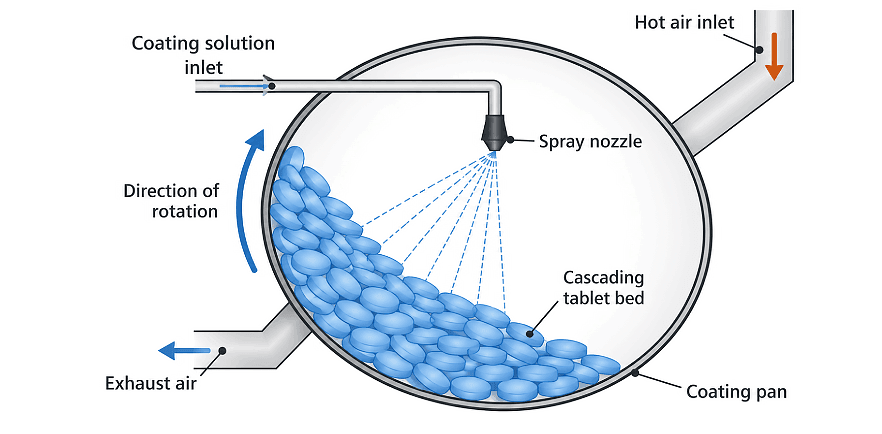
For a deeper explanation, see Tablet Coating Machine Working Principle.
What Should You Check in the Spray System?
A typical spray system includes:
· a coating solution or suspension tank;
· a feed pump;
· liquid tubing;
· a spray arm or spray bar;
· one or more atomizing spray guns.
When you compare machines, focus on control and adjustability rather than spray-gun quantity alone.
Ask:
· Can the liquid feed rate be adjusted and kept stable?
· Can the spray pattern be adjusted?
· Can the spray-gun position be changed for different tablet beds?
· Are the spray guns standard or optional upgrades?
· Is the feed pump suitable for your coating liquid?
· Can the supplier explain how the effective spray zone matches the tablet bed?
More spray guns do not guarantee better coating. Gun spacing, spray overlap, tablet-bed movement, and drying capacity also affect coating performance.
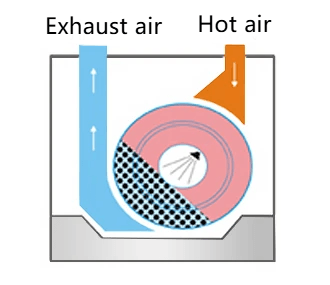
What Should You Check in the Air-Handling and Exhaust Systems?
Confirm that the machine provides:
· filtered process air;
· a heating system;
· adjustable inlet-air conditions;
· an exhaust system;
· negative-pressure control;
· suitable duct connections.
Also confirm the heating method. Some configurations use electric heating as standard, while steam heating may be offered as an option.
5. Decide How Much Automation and Data Capability You Need
Terms such as "PLC controlled" and "fully automatic" are too vague for a useful comparison. Compare the actual functions instead.
These functions are not the same.
A touchscreen can display values without recording them. Data logging does not mean the system has an audit trail. Automatic adjustment is also not the same as closed-loop control.
FDA 21 CFR Part 11 applies to certain FDA-regulated electronic records and electronic signatures. Part 11 requirements depend on how those records and signatures are used, rather than on the presence of a PLC or touchscreen alone.
Define the functions your quality system requires before you choose the control package.
If you only need basic operation and parameter display, a simpler control system may be enough.
If you need recipe management, batch records, access control, electronic records, or integration with a larger pharmaceutical data system, include those requirements in the technical specification before ordering.
6. Confirm Cleaning, Materials, Validation, and Safety Requirements
Discuss cleaning and validation requirements before you finalize the machine configuration.
Pharmaceutical GMP principles require equipme
nt to be suitable for its intended use and easy to maintain and clean. Product-contact surfaces should not adversely affect product quality.
Before ordering, confirm:
· product-contact materials;
· access to the coating drum and internal surfaces for cleaning;
· which parts must be removed for cleaning;
· drainage design;
· manual cleaning requirements;
· whether CIP or WIP is available;
· whether the machine only has CIP connections or includes a complete CIP system;
· operation and maintenance documents;
· material certificates;
· FAT / SAT requirements;
· IQ / OQ / PQ support, if required.

When you compare quotations, pay close attention to the difference between CIP-ready and a complete CIP system.
A machine may include the required ports and connections while a complete automatic cleaning system is still optional.
Define documentation and validation requirements during procurement so they are included in the agreed project scope.
If your process uses organic solvents or high-potency materials, confirm explosion protection and containment separately.
7. Confirm Site Conditions, Utilities, Installation, and Lead Time
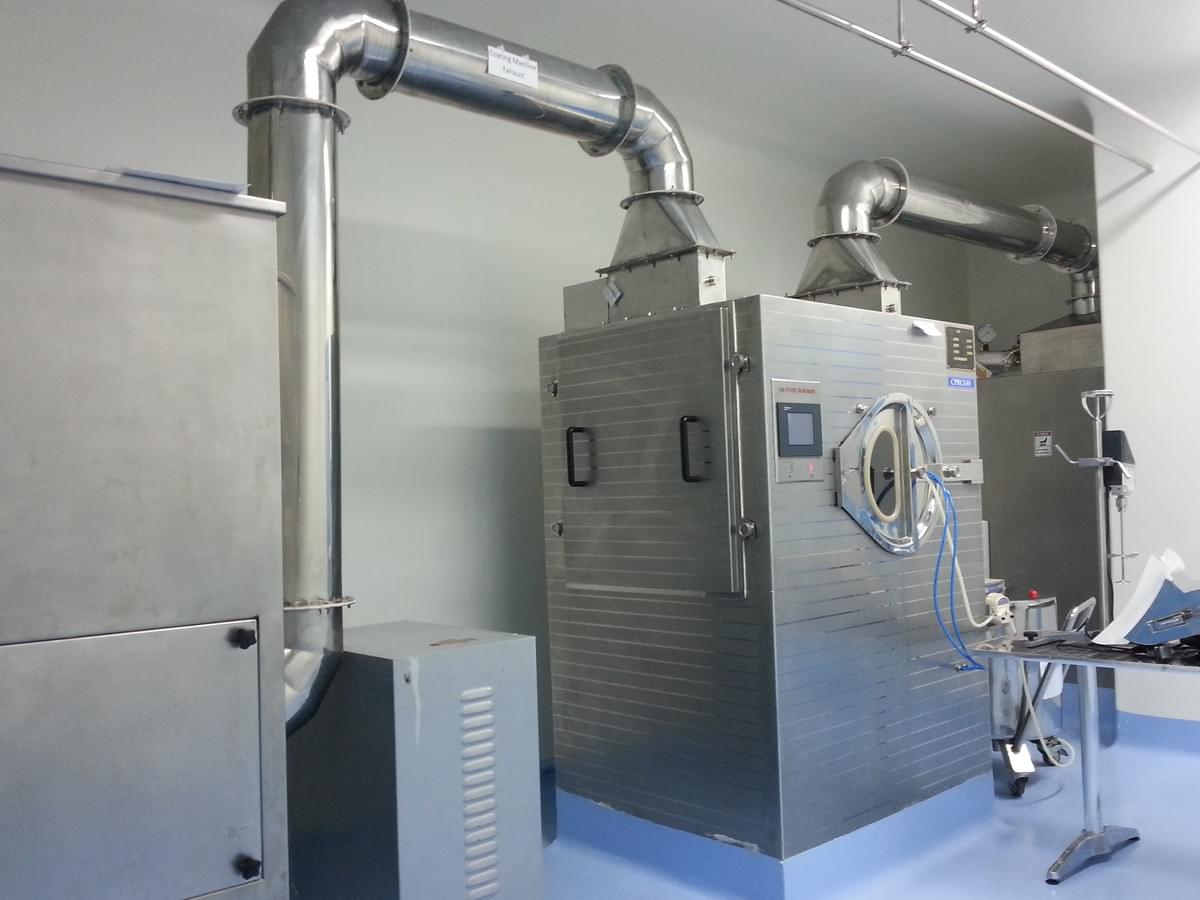
Before ordering, make sure the selected machine can actually be installed in your production area.
Check at least:
· machine dimensions;
· machine weight;
· door and corridor dimensions;
· ceiling height;
· voltage and frequency;
· compressed-air supply;
· exhaust connection;
· heating method;
· steam supply, if required;
· drainage;
· maintenance space around the machine.
Confirm production lead time during the quotation stage.
Machine size, custom features, optional systems, documentation, and the factory production schedule can all affect lead time. Public supplier quotations for Chinese automatic tablet coaters often show about 30-45 days, although some are shorter. For project planning, allow about 4-7 weeks, depending on machine size, customization, options, and documentation.
A short lead time is useful, but it should be realistic. A schedule the supplier can meet is more valuable than the shortest promised date.
8. What Affects the Price of a Tablet Coating Machine?
Tablet coating machine prices vary widely because different quotations can include different systems, options, and services.
The main cost drivers include:
| Cost Factor | Why It Affects the Price |
|---|---|
| Working batch | Larger drums and process-air systems increase machine size |
| Drum design | Fixed and changeable drums use different structures |
| Spray system | Pump type, spray-gun type, quantity, and control method vary |
| Air handling | Filtration, heating, exhaust, and airflow control affect cost |
| CIP / WIP | A complete automatic cleaning system may be optional |
| Automation | Data logging and advanced control functions add hardware and software cost |
| Safety / containment | Explosion-proof or solvent-handling configurations require additional engineering |
| Documentation | FAT, IQ/OQ support, certificates, and validation scope vary |
| Installation / training | On-site service may be charged separately |
| Trade terms | EXW, FOB, CIF, and on-site service cover different scopes |
To make supplier quotations easier to compare, we prepared a Tablet Coating Machine RFQ & Quote Comparison Checklist.
Use it to compare machine configuration, optional items, documentation, service scope, and commercial terms on the same basis.
9. How to Get a More Accurate Tablet Coating Machine Quote
Once you have defined the machine type and basic production requirements, organize the information into an RFQ.
A practical RFQ should include:
1. Normal, minimum, and maximum batch size
2. Tablet size, shape, and approximate weight
3. Coating type
4. Coating liquid or suspension type
5. Target output or batch frequency
6. Automation and data requirements
7. Cleaning and validation documentation requirements
8. Site utilities
9. Installation space or access limits
10. Target delivery time and budget range, if appropriate
With this information, the supplier can recommend suitable coating equipment and prepare a technical solution for your project.
You should also evaluate the supplier.
Check whether the supplier can:
· explain why a specific model is recommended;
· clearly separate standard and optional configurations;
· define the FAT and validation-document scope;
· provide installation and training;
· explain spare parts and after-sales support;
· state warranty terms clearly in the quotation or contract.
A good supplier should turn your production requirements into a clear machine configuration, not just send a model number and price.
For available configurations, see the LTPM Tablet Coating Machine Series.
Need Help Choosing a Tablet Coater?
Send us your batch size, tablet dimensions, coating type, coating liquid, target output, and automation requirements.
We can use this information to recommend a suitable tablet coating machine configuration and prepare a quotation based on your production requirements.
LTPM China can provide a 5-year warranty for its tablet coating machines.
