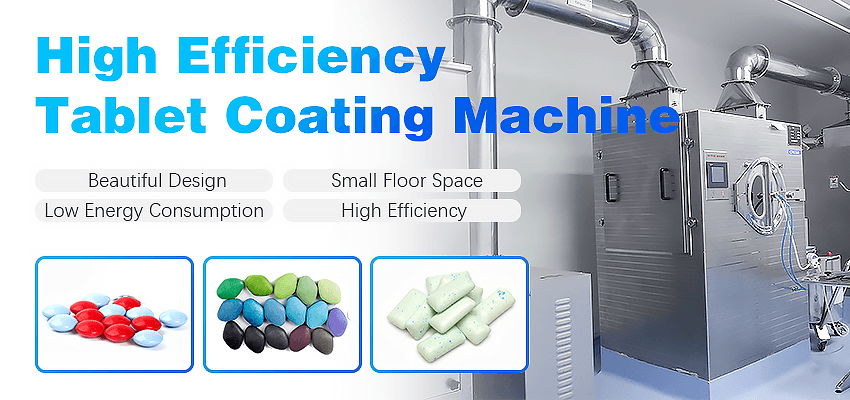
Tablets usually come in two forms. One type is smooth, shiny, and polished — these are coated tablets. The other type looks plain, slightly powdery, and may shed a bit of dust — these are uncoated tablets. The differences between them go far beyond appearance; coated and uncoated tablets also function differently in important ways.
Coated Tablets vs. Uncoated Tablets

What Are Coated Tablets?
Coated tablets are tablets covered with a special outer layer. This coating improves tablet stability, makes swallowing easier, masks unpleasant tastes, and can control where and when the drug is released in the body.

In modern pharmaceutical manufacturing, coating is not just for appearance — it plays a crucial functional role. The most common types of coatings include the following:
1. Film-Coated Tablets
A very thin film is applied over the tablet surface.
Benefits:
- Smooth surface and easier swallowing
- Effectively masks bitterness or bad odors
- Color can help with identification and compliance
- Protects against moisture and light, extending shelf life
- Makes tablets stronger and less likely to break during transport
Common examples:
- Ibuprofen tablets
- Metformin tablets
- Paracetamol/Acetaminophen tablets
- Multivitamin tablets
2. Enteric-Coated Tablets
These tablets are cleverly designed so that they do not dissolve in the stomach. Instead, they remain intact until they reach the intestines, where they begin to dissolve and release the drug.
Why use enteric coating?
- Protects the stomach lining from irritating drugs
- Prevents stomach acid from damaging acid-sensitive ingredients
- Allows the drug to take effect in the intended site (the intestines)
Common examples:
- Omeprazole enteric-coated capsules or tablets (the pellets inside are enteric coated)
- Aspirin enteric-coated tablets
- Pancreatin enteric-coated capsules
3. Sugar-Coated Tablets
This is a more traditional coating method, similar to coating a candy. A thick layer of sugar is built up around the tablet.
Benefits:
- Excellent taste masking
- Smooth, glossy appearance that looks more appealing
- Often used for children’s medications in the past
Common uses: Some antacids, vitamins, and traditional herbal tablets.
In summary, coating a tablet mainly serves to:
- Improve taste
- Enhance stability (protection from moisture, oxygen, and light)
- Control release (delayed or targeted release such as enteric delivery)
- Make swallowing easier
- Improve branding and identification through color or shine
Whenever a medication requires special protection or the patient needs better swallowing comfort, it is generally formulated as a coated tablet.
What Are Uncoated Tablets?
Uncoated tablets are simple compressed tablets without any external coating. Because they lack a protective layer, they typically dissolve quickly in the stomach, allowing the drug to be absorbed faster.
They are low-cost, fast-acting, and very common in many basic over-the-counter medications and supplements.

Why Use Uncoated Tablets?
- Rapid onset: With no coating to slow dissolution, the drug is released and absorbed quickly.
- Lower cost: Without a coating step, manufacturing is simpler and more affordable.
- Minimal ingredients: Fewer excipients, which is helpful for individuals sensitive to polymers, dyes, or coating additives.
Common examples of uncoated tablets:
- Basic paracetamol/acetaminophen tablets
- Vitamin C tablets (many inexpensive VC tablets are uncoated and taste sour)
- Calcium tablets
- Many generic pain relievers
- Effervescent tablets or fast-dissolving tablets
Uncoated tablets typically contain only the essential components: the active drug, fillers, binders, disintegrants, and lubricants.
How to Choose Between Coated and Uncoated Tablets?
The choice depends on several factors:
- Sensitivity: If the drug irritates the stomach or breaks down in stomach acid, coated tablets (especially enteric-coated ones) are the better option.
- Need for rapid action: If fast relief is needed, uncoated tablets are usually preferred because they dissolve immediately.
- Ease of swallowing: Coated tablets are smoother and easier to swallow, especially for people sensitive to taste or texture.
When Is a Coated Tablet Better?
Choose coated tablets if:
- The drug can irritate the stomach lining (e.g., aspirin)
- The active ingredients are degraded by stomach acid (e.g., omeprazole)
- The taste is extremely bitter and hard to tolerate
- Controlled or delayed release is needed
- Improved swallowing comfort is important for adherence
When Is an Uncoated Tablet Better?
Choose uncoated tablets if:
- Rapid action is needed (e.g., basic painkillers)
- Lowest cost is a priority
- The drug is stable and does not require protection
- The patient prefers fewer additives and a simpler formulation
Both coated and uncoated tablets have their own advantages. Coated tablets excel in taste masking, controlled release, and stability, making them ideal for medications requiring special handling. Uncoated tablets offer simplicity, rapid action, and affordability.
Understanding the differences helps you select the most suitable tablet form based on the characteristics of the drug, treatment goals, and patient needs.
If you are choosing the right dosage form for your product or need technical support for
tablet coating processes, our expert team is always ready to assist you.